Concrete Slab & Foundation Work
Building the solid foundation your home, garage, or addition needs to stand strong for generations.
Why Foundation Quality Matters
Your foundation literally supports everything above it. Whether you're building a new home, adding a garage, or constructing a shed, the quality of your concrete foundation determines how well that structure performs for decades to come. Cutting corners here creates problems that are expensive and difficult to fix later.
At RegalCrest Kent Concrete, we understand that foundation work isn't glamorous. Nobody sees it once the building goes up. But we also know it's the most critical part of any construction project. A properly poured foundation prevents settling, cracking, moisture problems, and structural issues that compromise your investment.
Ohio's soil conditions and weather patterns make foundation work particularly important here. Clay soils expand when wet and shrink when dry, creating movement that stresses foundations. Freeze-thaw cycles in winter put additional pressure on concrete. We account for these local conditions in every foundation we pour, using appropriate thickness, reinforcement, and construction techniques.
Think about what your foundation must do. It distributes the entire weight of your structure evenly to the ground. It keeps moisture out of your building. It resists frost heaving in winter and soil movement in spring. It needs to stay level and intact for 50 years or more. That's a lot to ask from concrete and dirt, which is why proper installation matters so much.
Many homeowners don't realize that foundation problems often start before the concrete is even poured. Poor site preparation, inadequate compaction, wrong concrete mix, or rushed curing all lead to issues down the road. We take time to do every step correctly because your foundation deserves nothing less than our best work.
Foundation Types and Applications
Different structures require different foundation approaches. Let's walk through the common types of foundation work we handle and when each makes sense for your project.
Foundation Services We Provide
- Slab-on-grade foundations for new home construction
- Garage slabs with proper drainage and reinforcement
- Basement floors and foundation walls
- Equipment pads for HVAC units and generators
- Shed and outbuilding foundations
- Addition footings that integrate with existing structures
- Crawl space floors and vapor barriers
- Frost footings for posts and columns
Slab-on-grade foundations are common for garages, additions, and some new homes. We excavate to stable soil, install a gravel base, add vapor barrier, place reinforcement, and pour concrete to the specified thickness. This creates a solid, moisture-resistant floor that's ready for use once it cures.
Basement foundations require more steps because they must support vertical loads and resist lateral soil pressure. We pour footings first, then form and pour foundation walls. The basement floor comes last, after backfilling is complete. Waterproofing is critical here to prevent moisture problems later.
Equipment pads might seem simple, but they need careful attention to size, thickness, and reinforcement. A concrete pad supporting a heavy HVAC unit or generator must stay level and crack-free despite constant vibration and weight. We size these properly and reinforce them adequately for the equipment they'll support.
For additions, matching the new foundation to your existing structure takes planning. We ensure the new work integrates properly, maintains consistent floor heights, and doesn't create drainage problems. The goal is making your addition look and function as if it was always part of your home.
How We Build Foundations That Last
A skilled concrete slab contractor follows a methodical process. Each step builds on the previous one, and rushing or skipping steps creates problems. Here's what goes into every foundation we pour.
Site preparation begins with surveying and layout. We mark the exact location and dimensions according to your building plans. Excavation comes next, removing topsoil and digging to the depth specified by local building codes and your project requirements. In Kent, we typically dig below the frost line (about 42 inches) for footings to prevent frost heaving.
The base preparation determines stability. We install and compact crushed stone to create a stable, well-draining foundation. This step prevents settling and moisture problems. Proper compaction takes time because loose gravel allows settlement. We compact in layers, checking density as we go.
Vapor barriers go down next for slabs in contact with the ground. This plastic sheeting prevents ground moisture from wicking up through your concrete. It's a simple addition that prevents big moisture problems later. We overlap seams and seal them to create a continuous barrier.
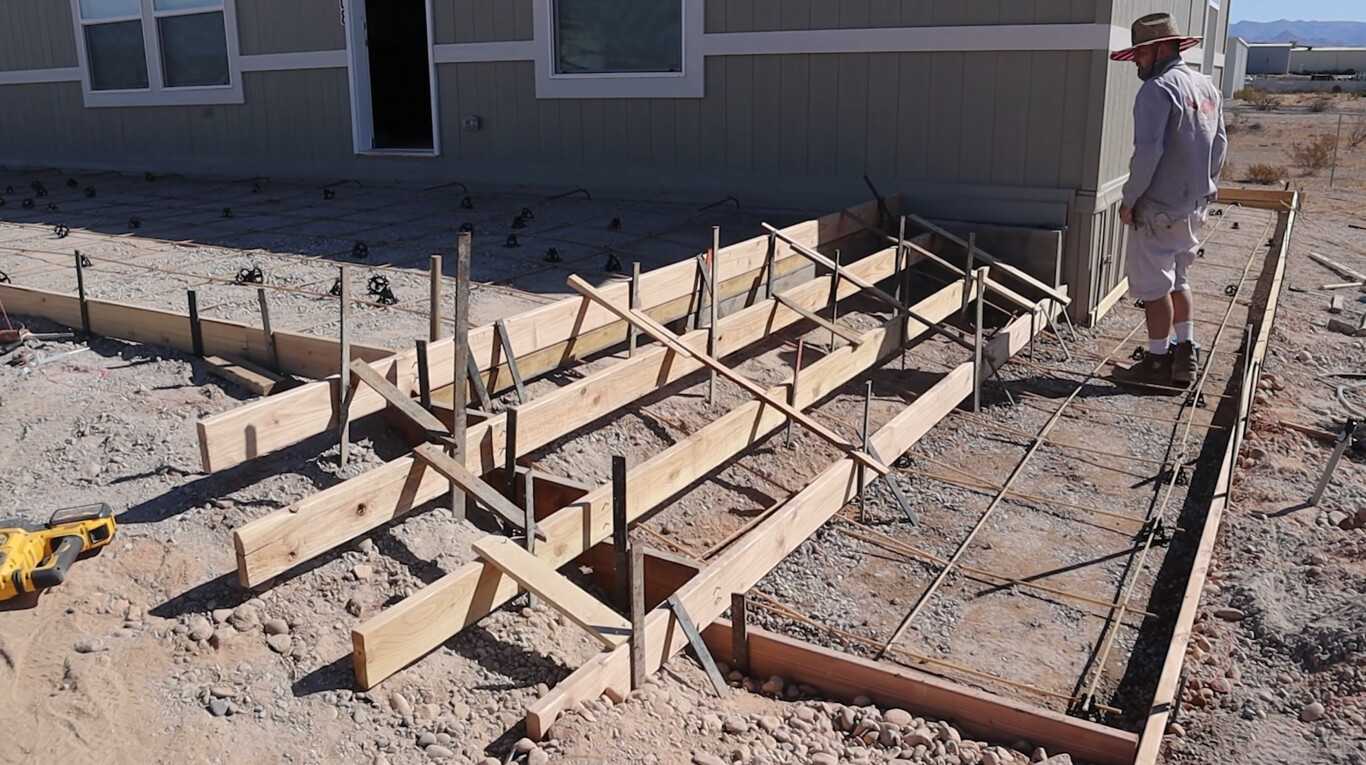
Reinforcement placement follows engineering specifications. Steel rebar or welded wire mesh strengthens concrete and controls cracking. For larger slabs or foundations supporting significant weight, we use a rebar grid with proper spacing and support. The reinforcement must stay in position during the pour, so we tie it securely and use chairs to maintain proper placement.
Forms create the edges and define the shape. For foundation walls, we build sturdy forms that can hold several tons of wet concrete without bowing or shifting. Forms must be level, plumb, and properly braced. Any movement during the pour creates problems that are difficult to fix.
The concrete pour requires coordination between our team and the concrete supplier. We specify the right mix design for your project, considering factors like strength requirements, exposure conditions, and curing time. During placement, we work systematically to fill forms evenly, vibrate out air pockets, and achieve proper consolidation.
Finishing creates the final surface. For slabs that will be visible, we trowel the surface smooth. For basement floors or garage slabs, we might add a broom finish for traction. The goal is creating a level, properly sloped surface that meets your needs and local building codes.
Curing is the final critical step. Concrete doesn't dry, it cures through a chemical reaction that requires moisture. We apply curing compound or use wet curing methods to ensure proper strength development. Rushing this step results in weak concrete that cracks prematurely.
Preventing Foundation Problems
Most foundation problems are preventable with proper construction techniques. Let's discuss common issues and how we avoid them in every project we complete.
Cracking is the most visible foundation problem. Small hairline cracks are normal and don't affect function. Larger cracks indicate issues like inadequate reinforcement, poor soil preparation, or excessive shrinkage. We prevent problematic cracking by using proper concrete mix designs, adequate reinforcement, control joints in the right locations, and proper curing methods.
Settlement happens when soil under the foundation compresses or shifts. This creates uneven floors, stuck doors, and cracks in walls. Prevention starts with removing unstable soil and replacing it with properly compacted fill. We don't cut corners on compaction because settlement problems are expensive to repair.
Moisture infiltration causes all sorts of problems, from musty smells to structural damage. Proper waterproofing, vapor barriers, and drainage prevent most moisture issues. For basement foundations, we apply waterproof coatings to exterior walls and install drain tile to direct water away from your foundation.
Frost heaving occurs when water in the soil freezes and expands, pushing upward on your foundation. This is why we dig footings below the frost line. For areas that can't go deep, we use proper insulation and drainage to prevent frost from forming under critical areas.
Poor drainage creates ongoing problems. Water pooling near your foundation eventually finds ways inside or undermines support. We grade all our concrete work to direct water away from structures. Downspouts should discharge at least 10 feet from your foundation to prevent water accumulation.
Inadequate reinforcement shows up years later when cracks spread or sections settle differently. Modern building codes specify reinforcement requirements based on loads and soil conditions. We follow these specifications and often exceed them slightly because the cost difference is minimal compared to the added security.
The bottom line is that foundation problems are usually preventable. Quality materials, proper techniques, adequate reinforcement, and attention to drainage create foundations that perform well indefinitely. When you're investing in new construction or an addition, insist on quality concrete work from experienced professionals who understand local conditions and building science.
Planning a Building Project?
Get expert foundation work from RegalCrest Kent Concrete. Call today for a consultation.
(330) 771-9879